
Traveling is a different experience at different stages of your life. I remember going on family trips when I was growing up, traveling with my parents and brother initially to visit the beach or family members in Florida, and then going further afield around the USA as we grew older. I've been fortunate enough to travel the world as an adult, visiting close to three dozen countries across five different continents and then writing about many of those experiences here on my website. But now my wife Liz and I found ourselves in a different position: trying to find good family trips that we could do with two young children in tow. Our sons William and Charlie were 3.5 and 1.5 years old at this point in June 2026 which put some severe limits on where we could go and what we could do. We did some planning and decided to spend a long four-day weekend in the city of Pittsburgh, with my parents coming along to help watch the kids and everyone staying together in a rented house. Pittsburgh was only a few hours away by car from our home in the Washington DC area and Liz had never visited the city before. We were hoping that this would be a great place for the kids to have some new experiences and get a little more practice with traveling outside of their usual routine.
As a quick primer on Pittsburgh, this is one of the more unique cities in the United States. Pittsburgh is a hilly city situated at the point where the Allegheny and Monongahela Rivers meet together to form the mighty Ohio River, making it a critically important location that has been strategically contested dating back into the colonial period. It was the battle for this spot that kicked off the French and Indian War component of the Seven Years War in 1754 and ultimately resulted in the French "Duquesne" name getting replaced by the English "Pittsburgh". The city was also located near the huge coal deposits of central Pennsylvania which resulted in Pittsburgh becoming famous as the "Steel City" for its heavy industry in the late 19th and early 20th centuries. Pittsburgh has since deindustrialized after a painful few decades in the 1960-1980 period and now has an economy based around computer technology, healthcare, and finance. The constant presence of the three rivers gives this city a beautiful look on a nice day and Pittsburgh seems like a genuinely nice place to live - outside of the Pittsburgh Steelers being located here anyway!
I previously wrote about watching the Baltimore Ravens face the Steelers in a playoff game that took place in Pittsburgh at the end of the 2010 season, which I'll link again here for anyone curious.


We made the drive from our home to the Pittsburgh area during a Thursday afternoon, making a couple of stops along the way to break up the four hour trip for the kids. Since we couldn't get into our rental house until the end of the day, we stopped first at this tourist attraction on the south side of the rivers. This was the Duquesne Incline, a historic funicular that climbs the very steep Mount Washington and provides amazing views looking out over the rest of the city. This funicular opened back in 1877 with the intention of carrying cargo up and down the hillside, though it wound up being used by passengers as well due to the convenience it provided. The Duquesne Incline started to fall out of favor with the advent of the automobile and then closed in 1962 before being taken over by a non-profit organization and restored and reopened to the public a year later. This is now one of the most popular tourist attractions in Pittsburgh and often shows up in television and film portrayals of the city.

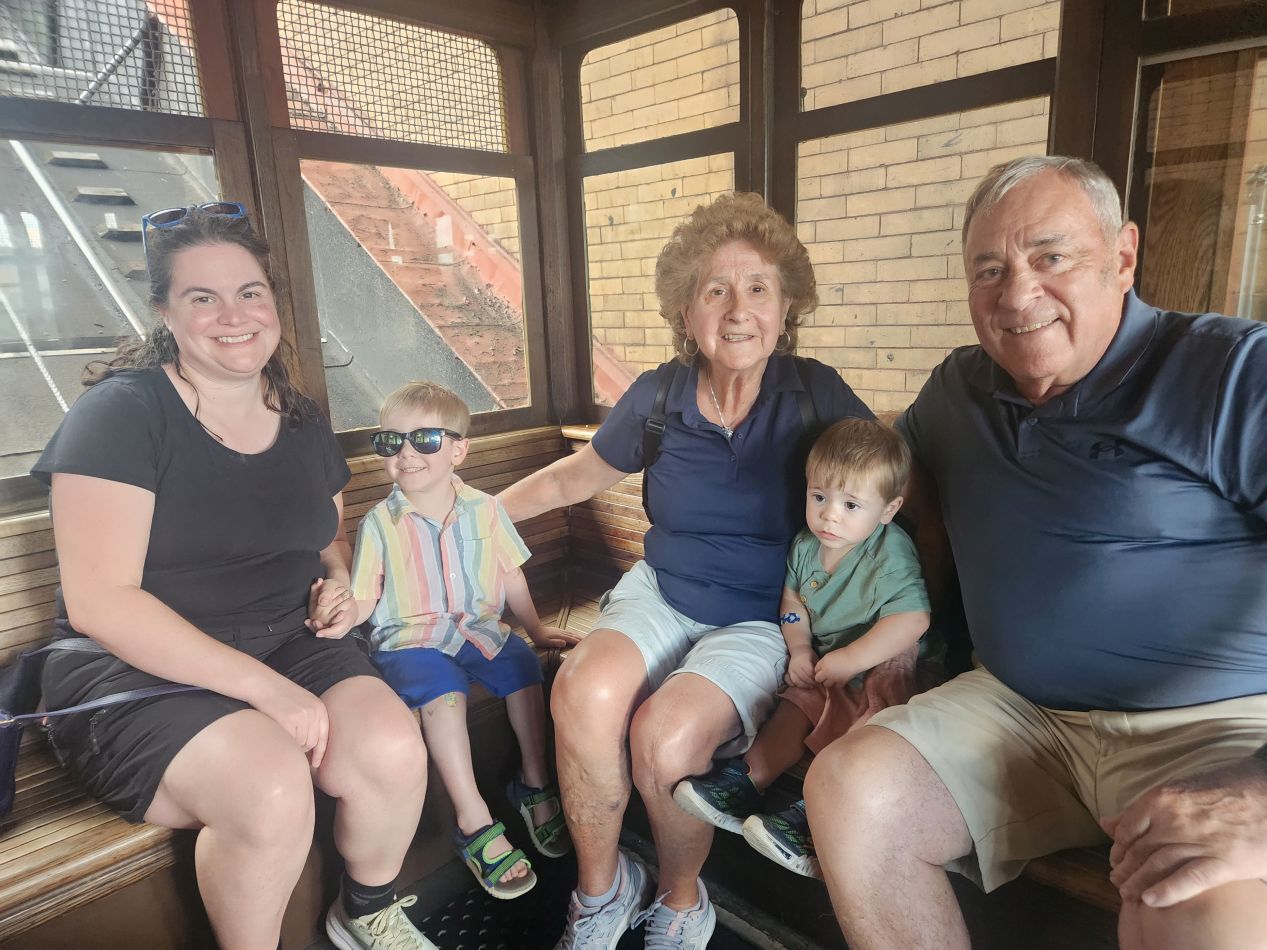


We bought our tickets and rode in the small wooden car together to the top of the hill. The incline is 800 feet (245 meters) long, 400 feet (120 meters) in height, and is inclined at a 30-degree angle whcih makes it quite a steep trip uphill. The summit had a viewing platform where we were treated to some outstanding sightlines looking out over the rest of the city. The Monongahela was the river to the right, the Allegheny was the one in the background, and they combined to form the Ohio which ran off to the left. We could see the parkland at the meeting point where historic Fort Pitt had been located along with almost a dozen colorful bridges stretching across the various bodies of water. It was a beautiful summer day and the city was putting its best face forward for our visit. We even stopped at a local pub and ate a small snack inside behind riding the funicular back down to the bottom once again.

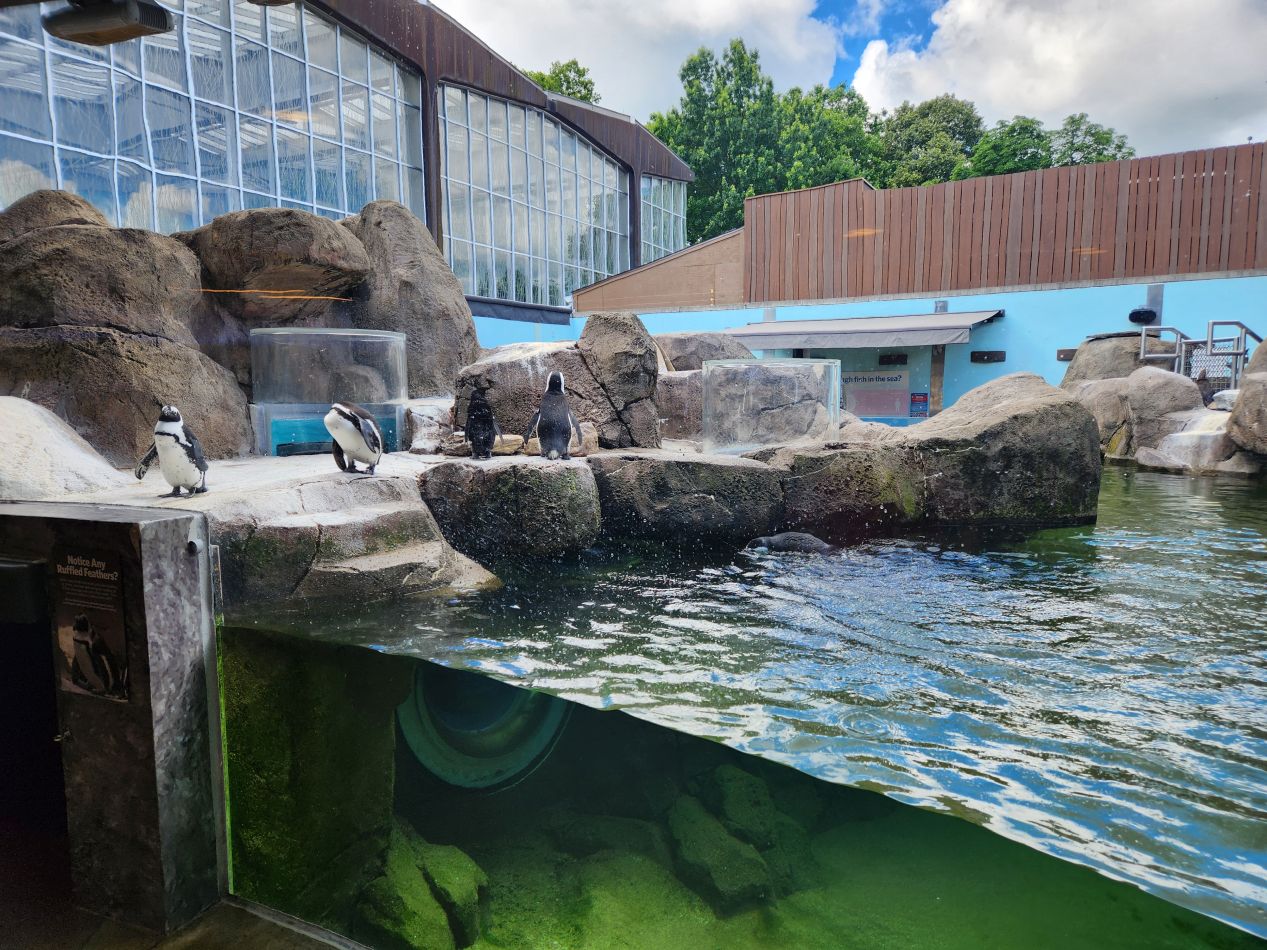


Our rental house was located on the north side of the rivers in the Old Allegheny historic district, where we managed to get dinner for everyone and get the kids to bed in a new environment without them being too crazy. The next morning we were able to walk a few blocks to the nearby National Aviary complex which turned out to be the nation's largest indoor aviary. This place was home to more than 500 birds representing more than 150 different species and has been here since 1952, though the current building is a more recent construction. We were already waiting when the Aviary opened at 10:00 (the kids had been awake since before 6:00 AM!) and headed straight for one of its featured attractions, Penguin Point. This was a viewing environment where visitors could watch the penguins normally through the glass, or crawl down under the enclosure to pop up in these little glass tubes right in the middle of their habitat. I think that those things were mostly intended for kids but that didn't stop me from heading inside - ummm, I was just following William and Charlie!


All kidding aside, this was a really cool experience and easily worth the price of admission all by itself. These birds were specifically African Penguins which unfortunately are critically endangered, making them the third different penguin species that I had encountered (after Little Penguins in Australia and the Galapagos Penguins). The viewing bubbles allowed us to get incredibly close to the small birds, literally mere inches away on the other side of the glass. We were close enough to see the fine details on their feathers and their webbed feet which is the sort of thing that the general public almost never experiences. There was also a feeding demonstration by the staff who kept tossing small fish into the air for the penguins to eat, though I wasn't able to watch the whole thing because William wanted to do an animal coloring exercise with crayons nearby. Welcome to the experience of traveling with small children!

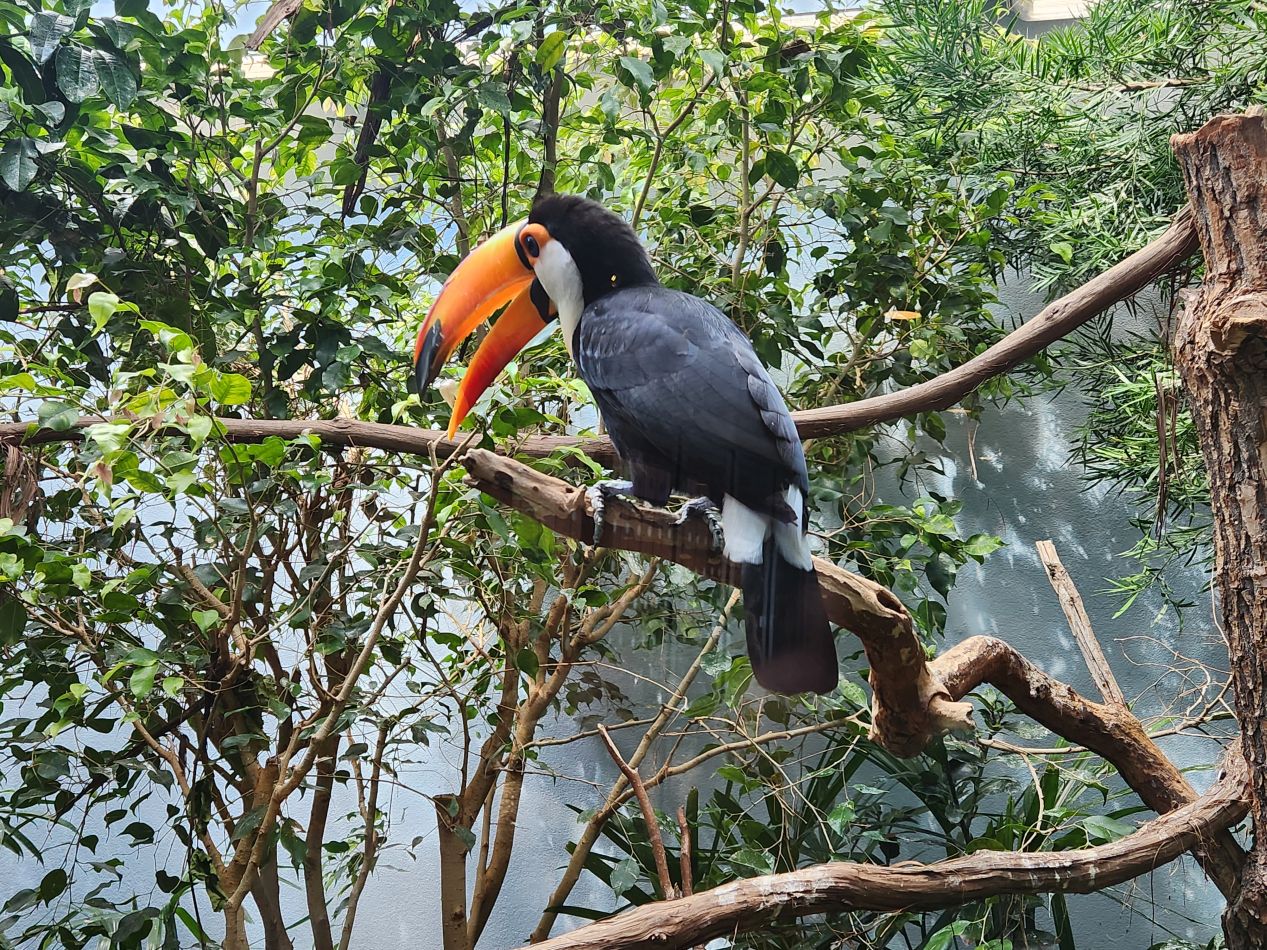


There were several additional habitats at the National Aviary designed to match the environmental conditions of birds from different parts of the world. The most impressive of these was probably the Wetlands habitant which was completed in 2022 and featured more than 20,000 square feet of bird-safe glass around its edges. This habitat featured flamingos and spoonbills and several types of ducks, all animals that enjoyed living in or around the water. The other side of the building had a tropical rainforest environment with colorful parrots, a sloth hiding out in the treetops, and this pictured peacock who lept onto the railing and kept calling out for its mate. We probably would have spent more time here searching for more of the birds but had to continue onwards for lunch because some small stomachs were getting hungry. The cafeteria inside the aviary was surprisingly cheap and made for a good place to grab a quick lunch.


We took the kids back to the house afterwards so that they could take their naps. This gave me a short window while both of them were asleep in which I could head out for a run and see a few more of the local sights. I only had a short interval of 45 minutes before I would need to get back and shower before waking up the kids, however fortunately we were close enough to the downtown that I could head over to the riverfront and back again. I started out by jogging about half a dozen blocks south to PNC Park, the home of baseball's Pittsburgh Pirates. This is the oldest professional sports team in the city, dating all the way back to the 1880s and preceding Major League Baseball itself. The Pirates have won five World Series titles and even won two more championships in 1901 and 1902 before the World Series had started. (The Pirates also beat the Baltimore Orioles in both the 1971 and 1979 World Series, something that I'm retroactively annoyed about even though I wasn't alive at the time.) This is a team with a very long and distinguished history, though the Bucs have been pretty bad for most of the 21st century. PNC Park is also one of the true gems of baseball stadiums, opened in 2001 with an absolutely perfect riverside location and one of the very few places that I rate as highly as Camden Yards. I previously saw a game here with some friends back in the early 2000s; the Pirates were out of town this weekend so we had no chance to catch another game during this trip.

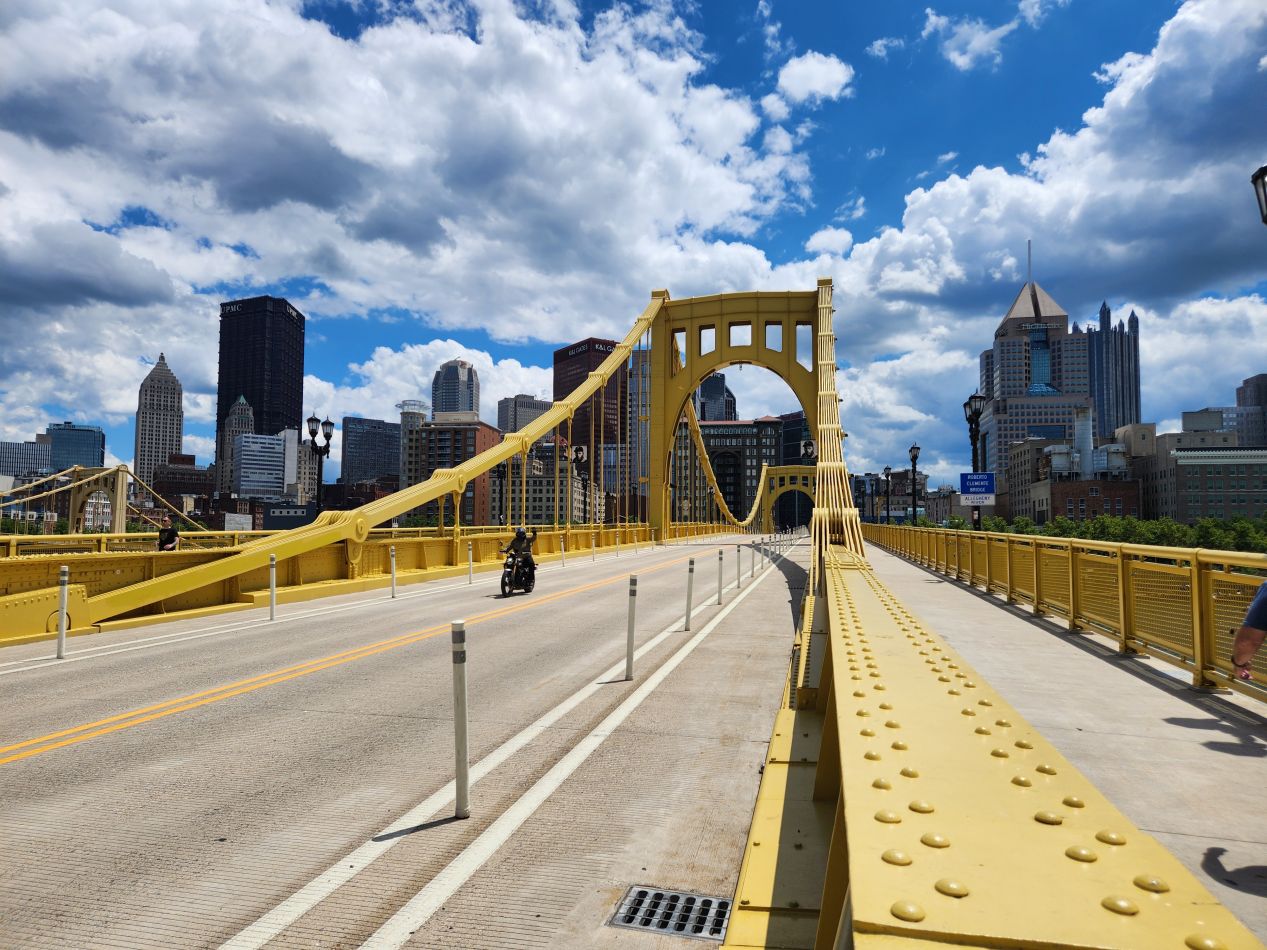


After popping into the Pirates team store, I continued onwards and immediately reached the Roberto Clemente Bridge. One neat thing about Pittsburgh is that many of the bridges are named after famous individuals associated with the city in some fashion: Andy Warhol, Rachel Carson, David McCullough, etc. each have bridges named in their honor. The one closest to the Pirates stadium is named after Hall of Famer baseball player Roberto Clemente, a beloved athlete and trailblazing Latino pioneer who tragically died in a plane crash in 1972, one which he had chartered to deliver emergency relief goods to earthquake victims in Nicaragua. There was a statue here commemorating Clemente and the bridge was named in his honor in 1998; this is the fourth bridge to stand on this spot and it dates back to 1928. The bridge had a nice wide lane for pedestrians and bikers which made it one of the best places to snap some quick photos looking out at the rest of the city. I went to the halfway point and captured these images looking back at the stadium, then turned around and headed down to the riverside following the banks of the Allegheny as it entered into the Ohio River.

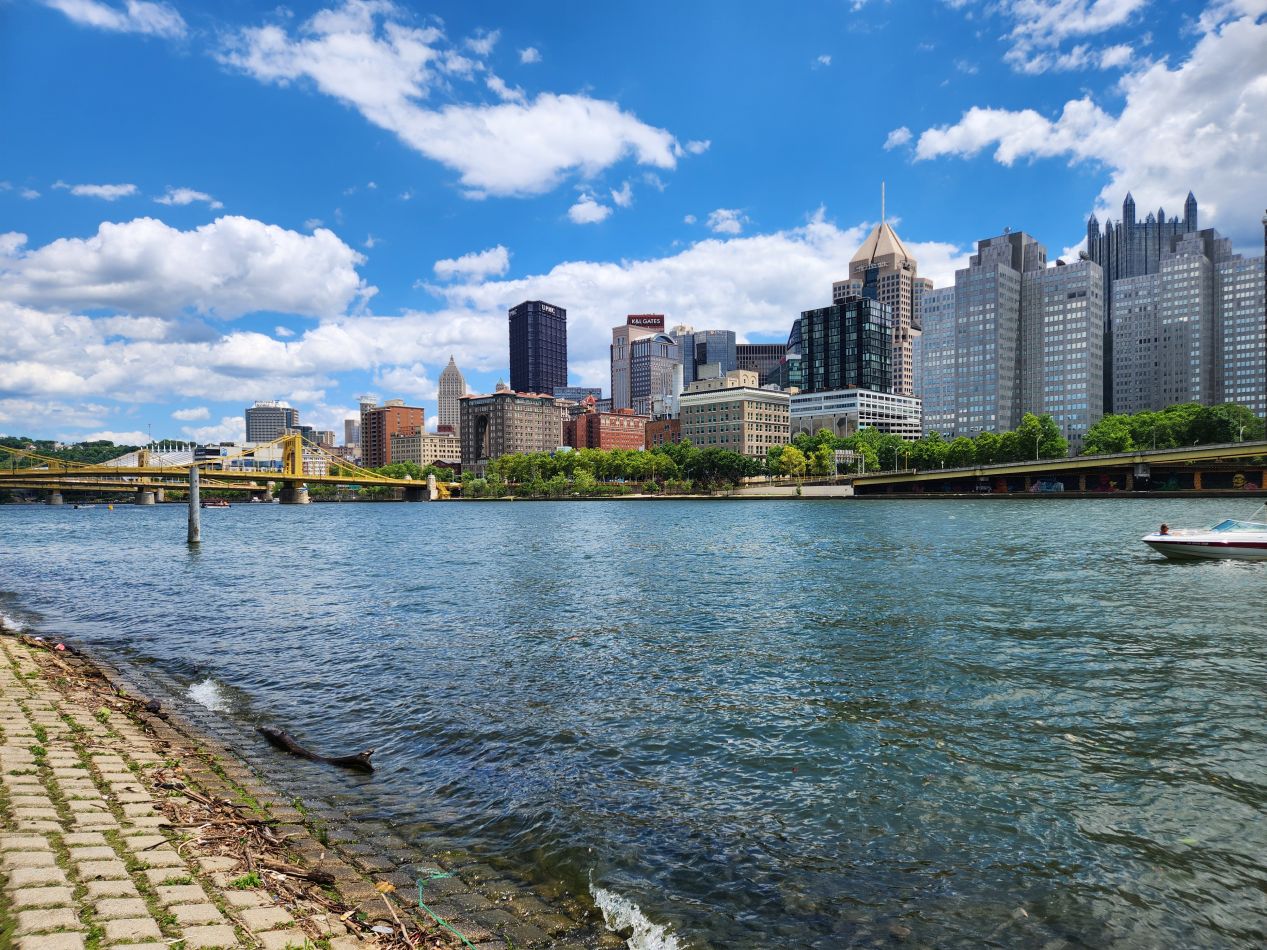


There was another walking trail that followed the riverbank here that a sign designated as North Shore Three Rivers Park. It was a gorgeous day to be outside, bright and sunny without being too hot, and I found a good number of other pedestrians outside enjoying the summer weather. There were more baseball-themed monuments placed along the water, between big numbers for each of the Pirates Hall of Famers and then a series of huge baseballs commemorating the Negro League teams that played in Pittsburgh, before a final life-sized statue of Bill Mazeroski who famously won the 1960 World Series on a walk-off homerun in the 9th inning of Game Seven, the only time that has ever happened. The views looking south across the river at the heart of the downtown were simply outstanding in these weather conditions, some of the best pictures that I took on this trip. I ran past the Water Steps fountain where a bunch of kids were cooling down and kept heading west until reaching the Fred Rogers Memorial. This commemorated the host of "Mister Rogers Neighborhood", an educational show for children that ran nationally for decades but started locally here in Pittsburgh. I didn't really like the design of this particular statue but it had a fantastic location, right across from "The Point" with the big fountain where the three rivers met.


And then a short distance to the north was Acrisure Stadium, home to the Pittsburgh Steelers football team. I had been here 15 years earlier for that infamous playoff game that the Steelers won (which I'm definitely not still bitter about, nope, definitely not!) and the stadium looked essentially identical aside from me being here in the summer as opposed to the winter. This stadium was opened in 2001 and was iconically known as Heinz Field for the next two decades; I should note that basically everyone still calls this place by that name because "Acrisure Stadium" is an obnoxiously corporate name. The Steelers have been playing in Pittsburgh since 1933 and have been one of the league's most successful franchises, winning six Super Bowls which is currently tied for the most by any franchise. They almost never have a bad season and have made the NFL playoffs 17 times in the last 25 years at the time of this writing. The Steelers are essentially a model franchise that can boast of having good drafting, good player development, good coaching, and consistently good results on the field. I hate these guys so freaking much! 


After I made my way back to the rental house and everyone had woken up, we traveled as a family to Pittsburgh's science museum. Located along the same riverfront not far from where I had just been running, this was officially known as the Kamin Science Center and dated back to an initial opening in 1989, though it has been known as the Carnegie Science Center for most of its history before receiving a big naming donation in 2024. The science center was a tall vertical building that stretched across five floors and held roughly 400 exhibits for visitors, making it the most-visited museum in the city. We took the kids up to the top fourth floor which was entirely devoted to activities for children. There were Lego racing cars for them to build, a climbing area, and a water table where they could splash around. Charlie spent most of his time playing with the water table while William was occupied for a full hour with this "tomato stand" where kids could fire green and red balls out of a cannon and raise them up to the ceiling on conveyor belts. They would have stayed here all day and as it was we didn't leave the science center until it closed at 5:00 PM.

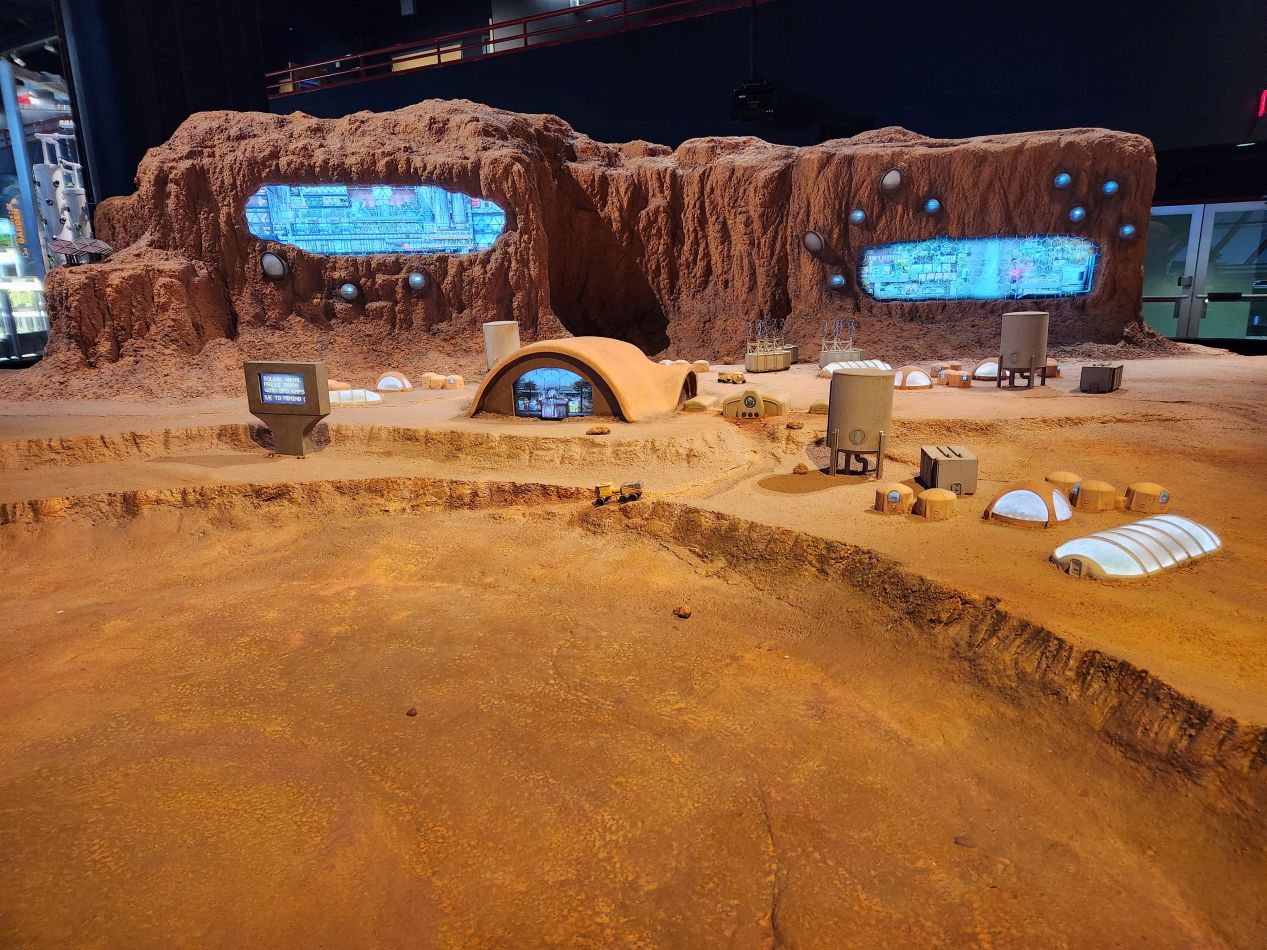


With my wife's permission, I snuck away from the kids section for 15 minutes to do a quick pass through some of the other parts of the museum. There were all kinds of other science attractions here, starting with a section on the human body that featured a detached human arm which was both fascinating and rather disgusting. A big portion of the second floor was devoted to an exhibit about what a Mars colony might look like, running through the long list of obstacles which would need to be overcome for human survival. I would have liked to spend more time there since that was really interesting stuff. There was also an excellent model train garden which reproduced the state of Pennsylvania in miniature, everything from farm country to the iron and coal mines in the mountains to a small version of the city of Pittsburgh. Elsewhere I liked a section of the museum about the International Space Station, including where it was located at that exact moment (which was apparently over an empty portion of the north Pacific). We wished that we could have spent a full day at this science center rather than catching the final 90 minutes that it was open.

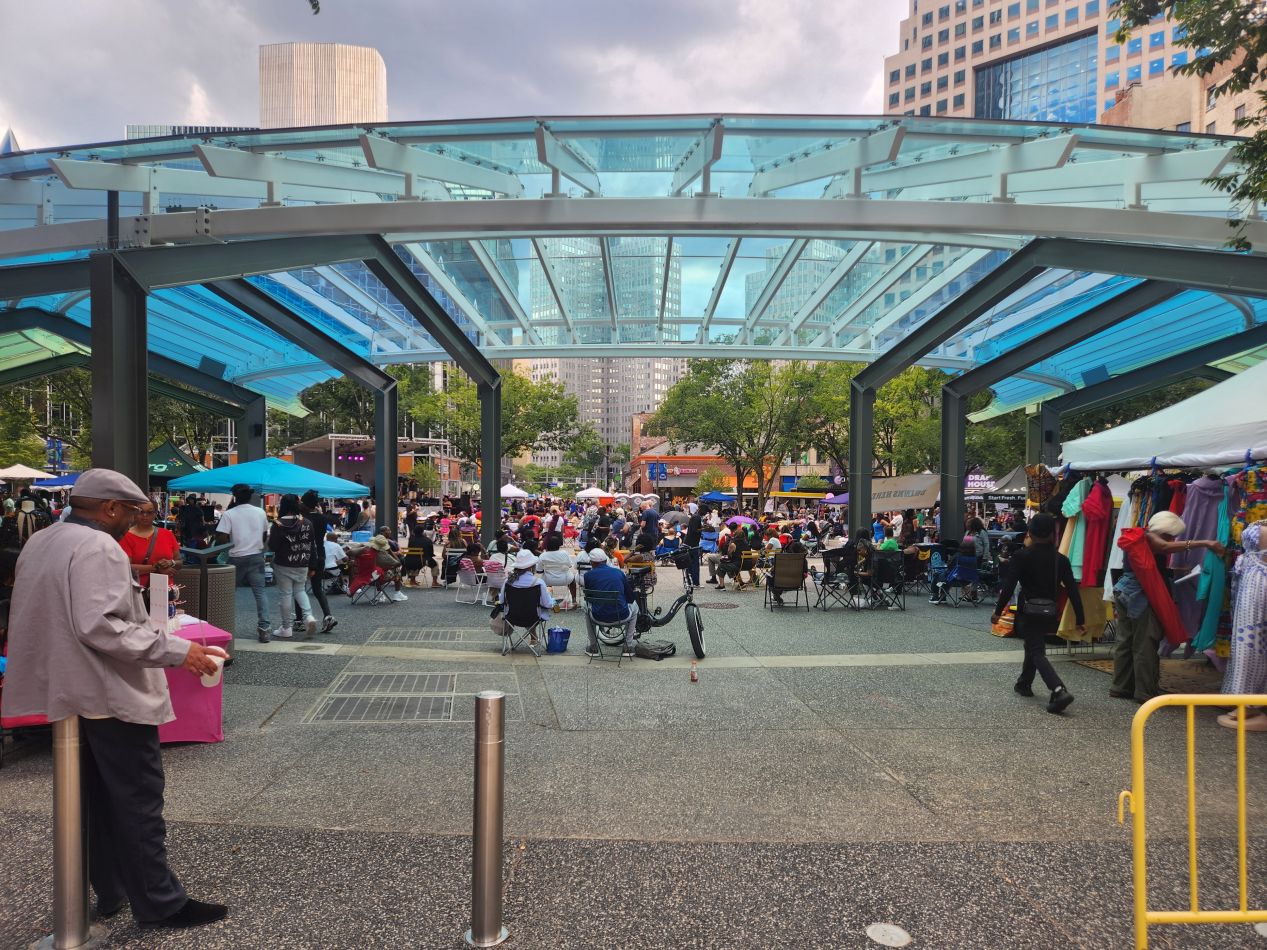


We drove across the Allegheny River after the science center closed and parked in downtown Pittsburgh so that we could get a nice dinner. We had specifically traveled to the historic Market Square, a location that dated all the way back to the city's founding in the 1780s. Market Square was another one of those urban spaces that felt into disrepair during the second half of the 20th century before being rennovated and reopened in 2010. Today it sits in the bustling heart of Pittsburgh and is surrounded by restaurants and cafes with the open space at its center serving as a public gathering space for city residents. That was exactly the case on this day since it happened to be Juneteenth (June 19th) and there was a huge festival taking place with live music playing in the square. We ate dinner outdoors at an Italian restaurant named Pizzaiolo Primo, and even though it was a bit on the pricey side, this was the only formal dinner that we had during the trip so it felt like a worthwhile splurge. The huge building towering overhead was the PPG Place complex, a 40-story office building looking like a castle and covered by matching glass designs. It's certainly the most distinctive building in the Pittsburgh skyline and felt like a futuristic version of what a medieval monarch might have built.


That was it for Friday evening, as Liz and I were never ones to stay out late anyway and any such gallivanting was no longer an option with the kids around. We were up early again on Saturday morning and headed over to the Pittsburgh Children's Museum as soon as it opened, once again conveniently within walking distance from where we were staying. This place is consistently rated as one of the best children's museums in the nation and our experience inside definitely backed up that claim. The museum was established in 1983 and took over two historic buildings, the former Allegheny Post Office and Buhl Planetarium, which provide it with lots of space for various kid-related activities. Upon arriving, Charlie headed into the enclosed climbing area pictured above with its various ramps and I followed him inside, with the two of us climbing all the way to the top (which did not have an exit!) followed by going all the way back down again. Meanwhile, William spent almost half an hour building with the rubber blocks, pegs, and cords at the workstation pictured above. Then they both spent a long time in the room with the big slide, taking part in activities where they delivered imaginary packages and walked across a crazy twisting floor.

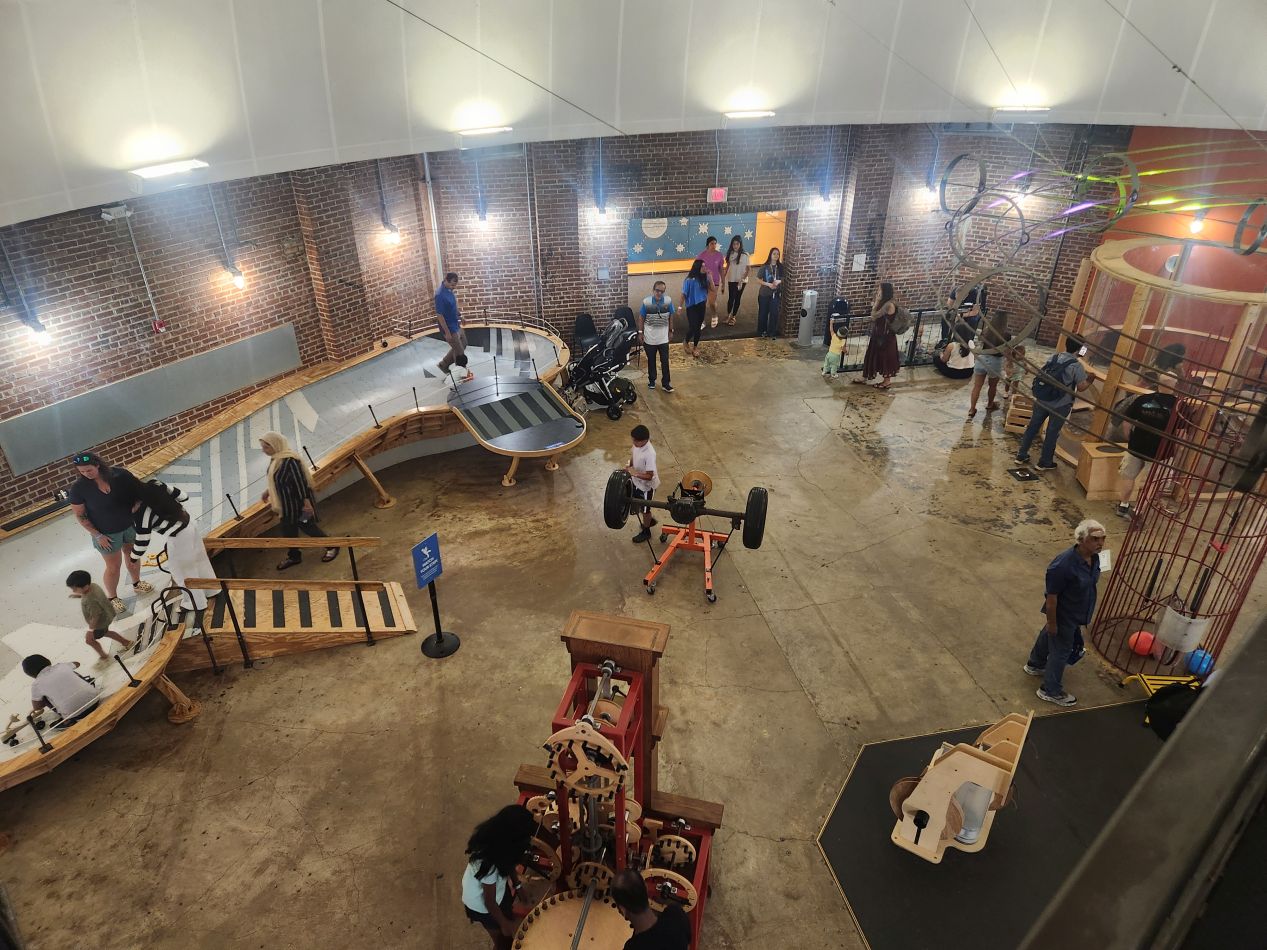


An even bigger hit with the kids was this huge open room with a dome that towered far overhead. This was obviously the former planetarium and it seemed to be dedicated to various kinetic-based activities, whether that was racing magnet-based cars or sending a ball up to the ceiling through a series of chutes or playing music on a Rube Goldberg machine. I think we were in this single room for close to an hour because neither of the kids wanted to leave. The next room over had a temporary exhibit associated with the books of Eric Carle, the author of the Hungry Hungry Caterpillar series. There were a bunch of things for the kids to climb on and pretend to be bugs which they also thoroughly enjoyed.

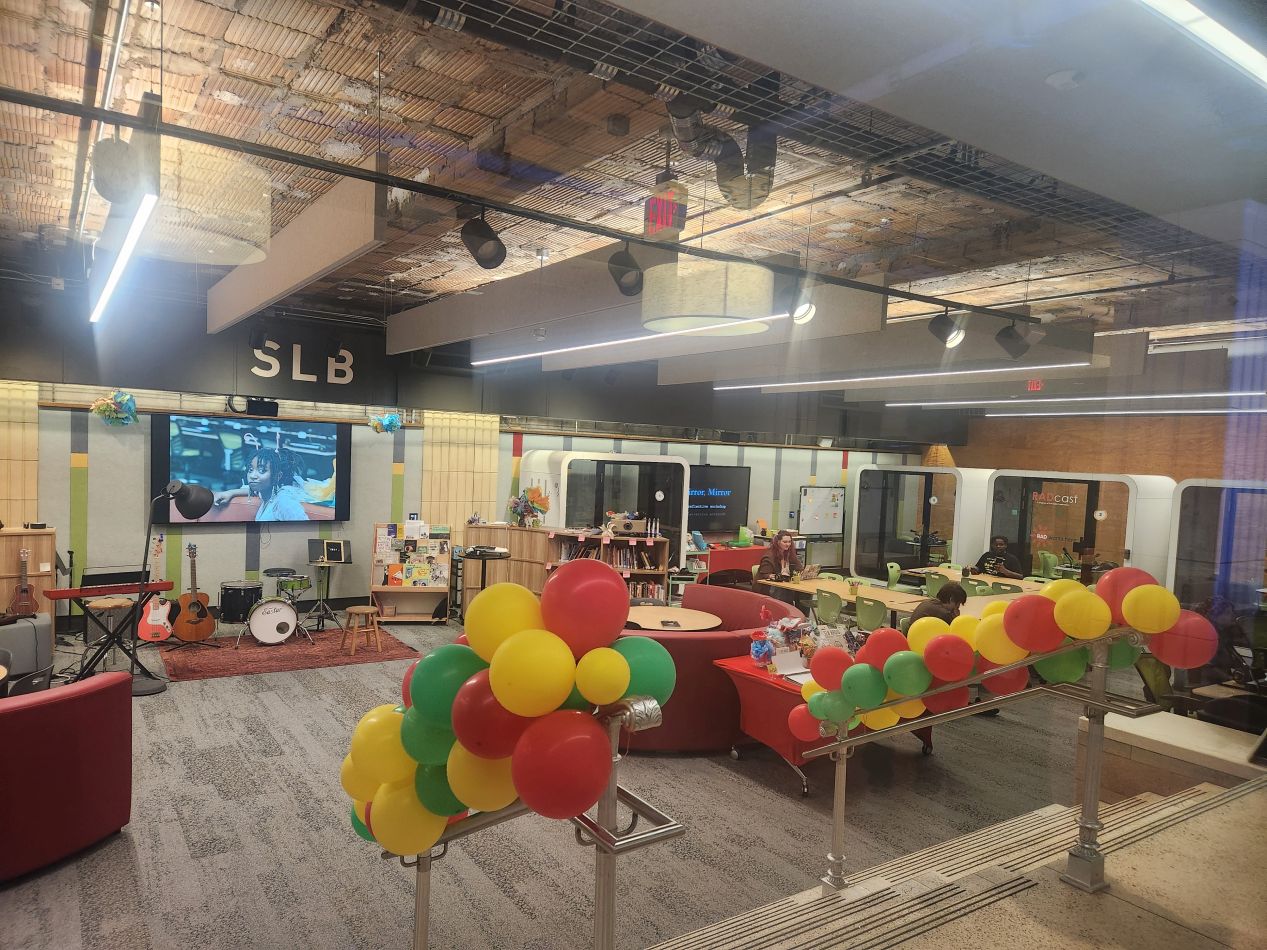


Eventually the children started to run out of energy and we stopped to get lunch in the museum's cafeteria. The food here was quite good (William liked the sandwiches shaped like a piano keyboard) and the unusual architecture made it clear that we were eating our meal in the former bank portion of the museum. There was also a broadcasting studio down in the basement, though I only glanced at that briefly through the doors while taking the kids to the bathroom. We walked back to the rental house at this point so that the kids could take their naps, then came back again in the afternoon since our admissions were still good for the whole day. This time we took the elevator up to the top floor where there was a water splash zone on a larger scale than what we had seen the previous day at the science center. We brought towels for the children and let them have fun playing with the various pipes and water spouts; William really liked this area though Charlie was a bit on the young side to enjoy everything. Once again we stayed until the museum closed at 5:00 PM and felt that we had really gotten our money's worth from visiting this place since the kids had had a total blast.
Up to this point we had enjoyed beautiful weather, however there was a downpour when we were leaving the Children's Museum this afternoon. We waited for a few minutes at the entrance until the rain tapered off, then managed to make it back to the rental house before the skies opened up again with a torrential thunderstorm. We were very lucky on the timing here since we had walked to the museum both times and didn't have any way to get the kids (and their stroller) back to the house otherwise. If the rain had been shifted even five or ten minutes in either direction, we all would have been drenched! 


My parents wanted to treat Liz and me this evening by watching the kids and allowing us to get dinner on our own. The fierce rainstorm made this a bit tricky but we still took our car and drove to a different neighborhood, the area known as the Strip District which was situated on the other side of the Allegheny River a little bit northeast of the downtown. This neighborhood was originally a warehouse district that hosted a bunch of mills and factories, however today the Strip District has been gentrified and instead features restaurants, bars, and public artwork. It was clearly a trendy area where young urban professionals like to meet up for dinner and drinks, that sort of thing. My parents do not like Asian food so we used this opportunity to get dinner at the Novo Asian Food Hall while they were eating their own meal with the grandkids. This was a really fun environment featuring several different styles of cuisine from China, Japan, Korea, Thailand, and so on. I ordered a big bowl of spicy Vietnamese noodles while Liz had a poke bowl which has always been one of her favorite dishes - everything was delicious.

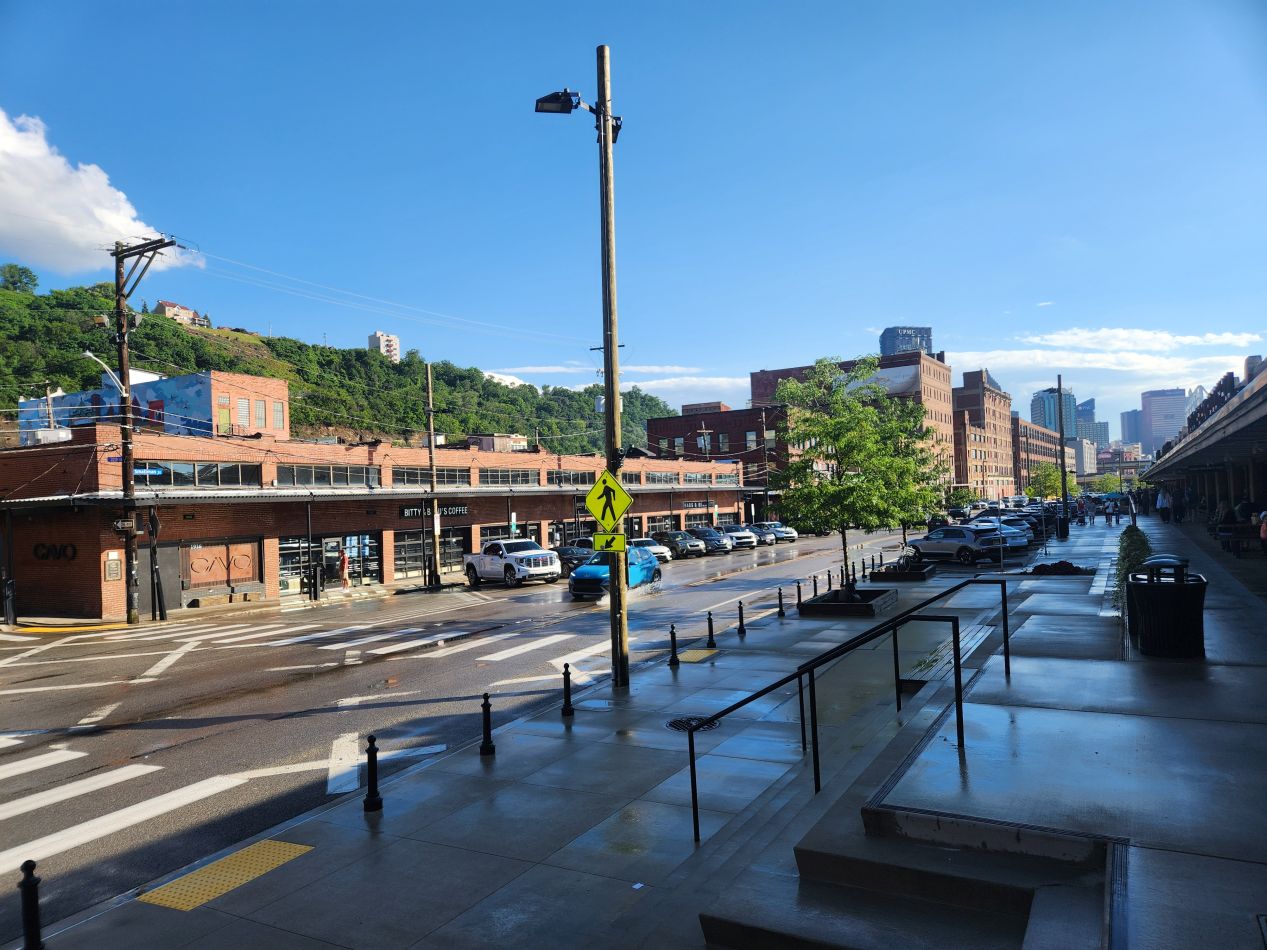


By the time that we were finished eating, the intense rainstorm had cleared out and the sun was shining once again over the soaked city streets. We spent a few minutes walking through this historic part of the Strip District where its heritage of former industrial buildings was easy to spot. There were brick structures everywhere which had once housed industrial workers and now contained restaurants and craft stores. We stopped at the Aslin Brewing Company which was a short distance away from the food hall, another place that would have been great to get dinner in its attached restaurant. We made sure to pick up some craft beer here as a reward for my parents spending an evening watching over the grandkids! We also walked past the original Primanti Brothers restaurant and a quintessentially Pittsburgh eatery named "Yinzers in the Burgh". There were probably 50 different places where we would have enjoyed our dinner in the Strip District and we would definitely recommend this area as a place to get some good food.

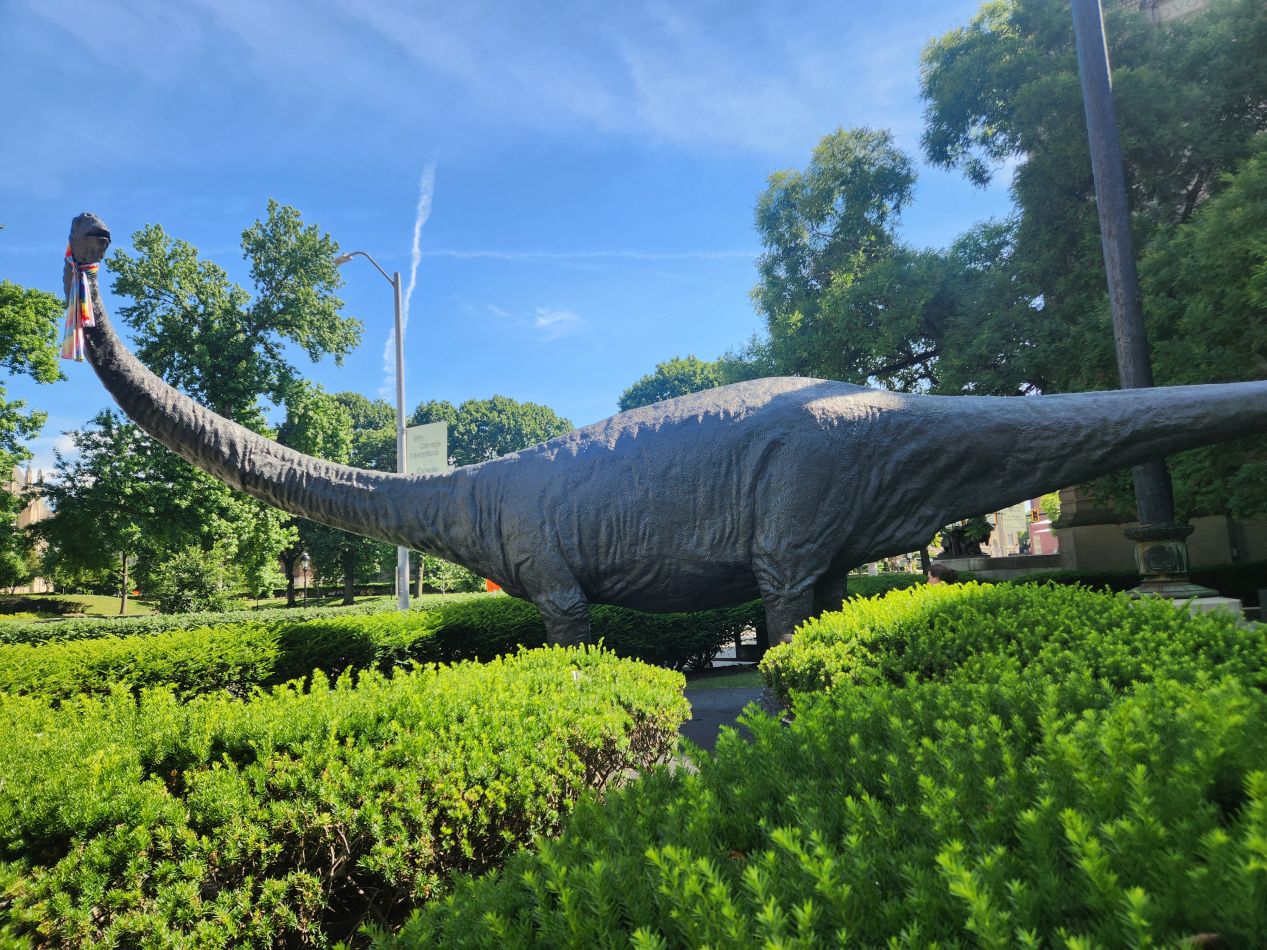


The next day was a Sunday and the final one that we had to spend on this Pittsburgh trip. After we spent the morning packing everything up at the rental house, we drove southeast across the Allegheny one final time before reaching the museum district in the Oakland neighborhood of the city. This area held the Carnegie Museum of Natural History as well as the University of Pittsburgh; the most famous building on campus, the towering Cathedral of Learning, was easily visible across the street from where we parked. I would have liked to explore the Pitt campus grounds but that would have to wait for another trip. Instead, we were here to see the natural exhibits at the Carnegie Museum and specifically the dinosaurs since our son William was obsessed with them. The Carnegie Museum contains more than 22 million specimens in its collections including some of the earliest dinosaur fossils from the 19th century due to the patronage of its namesake Andrew Carnegie. Outside the museum was this statue of "Dippy the Diplodocus" which was built at life size to indicate how huge these things were. It was wearing a rainbow scarf in celebration of Pride Month and apparently it's been a longstanding tradition to dress up Dippy for various festivities.

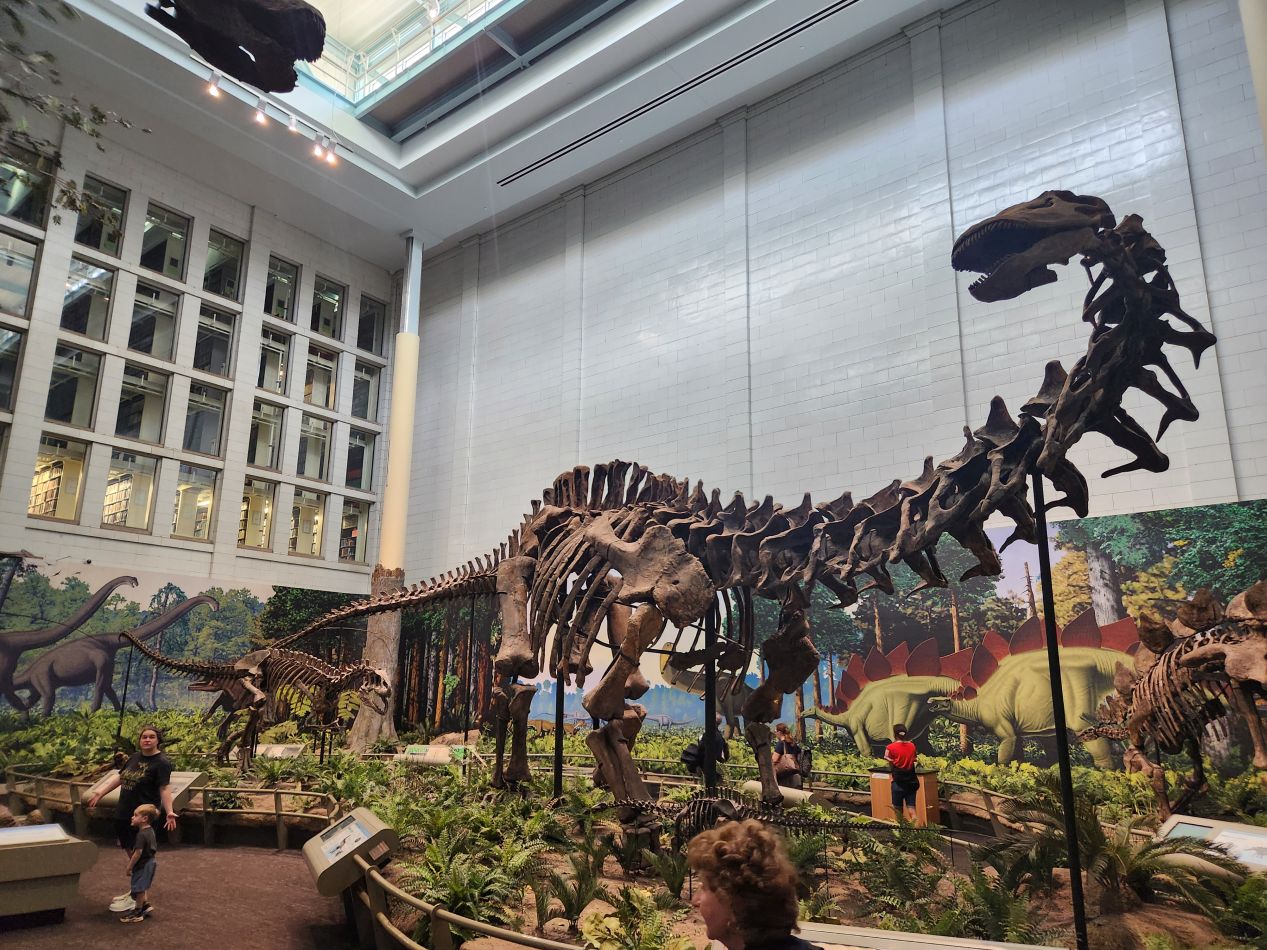


We headed straight to the dinosaur section of the museum, of course, which wasn't a bad idea since it was the featured part of the museum's collections. While there were plenty of smaller specimens on display, the highlight of the whole museum was the huge skeletons on display in two open rooms. There was another full-sized Diplodocus here to match Dippy outside which was one of the earliest skeletons to be found of the massive sauropods. Visitors could see the femur bone of the animal in a separate case by itself, which stretched 5 feet long and weighed 300 pounds on its own, with the entire dinosaur stretching out to about 85 feet / 25 meters in length. Then the next room had a pair of Tyrannosaurus Rex skeletons, one of which was the first T. Rex to be put on display back in the early 20th century. The museum staff had done an excellent job of putting these skeletons on display in big rooms which further emphasized their gigantic nature. It was really something to see them in person; reading about dinosaurs in books doesn't convey the same sense of sheer scale.

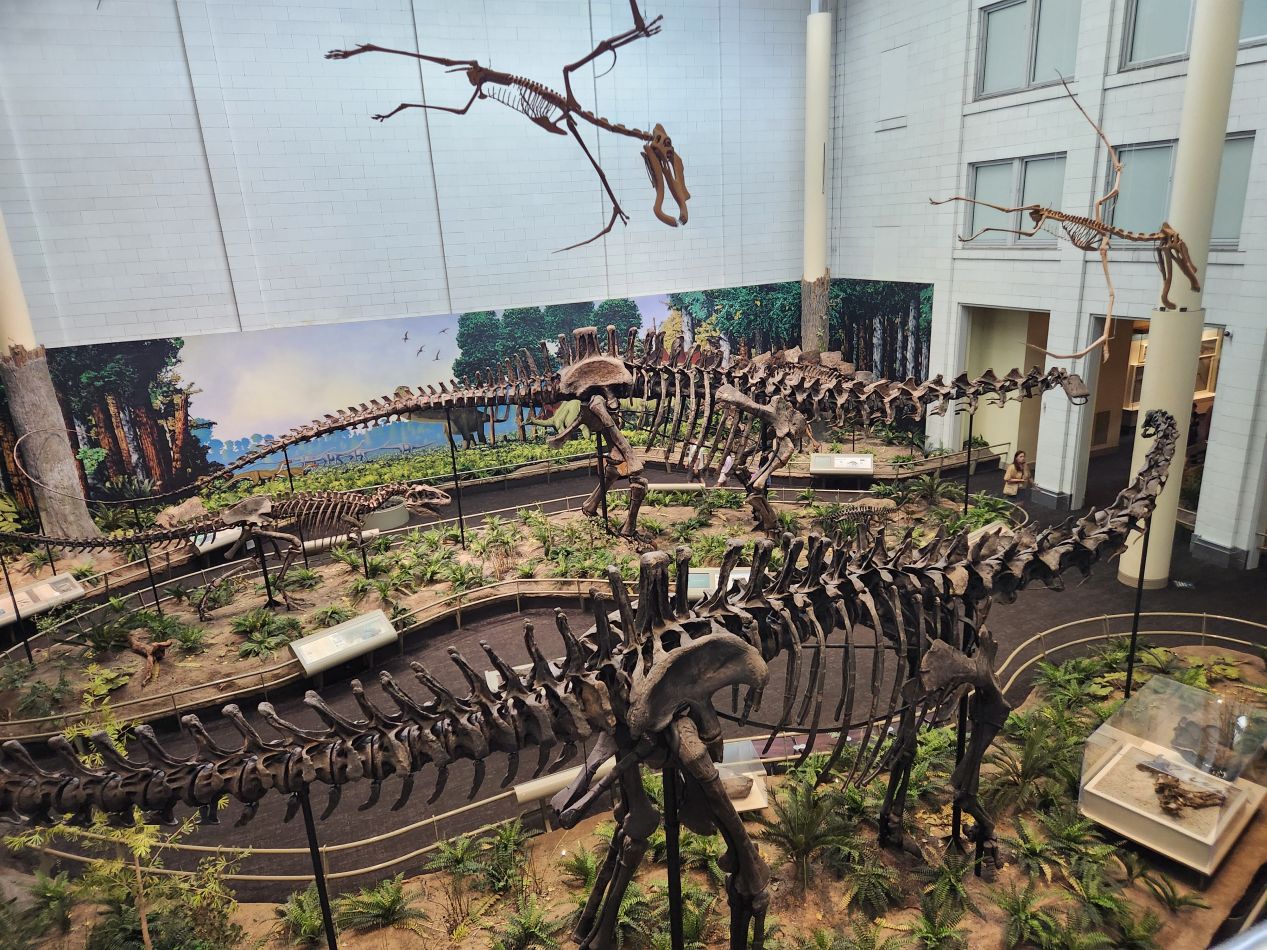


Here are some additional pictures of the dinosaurs taken from above to provide a further indication of how big these things were. The dinosaur portion of the museum continued on naturally into the Cenozoic section where there were skeletons from a series of extinct mammals on display. Many of these skeletons had come from the La Brea tar pits which was amusing to me since I had just been to that exact spot in California earlier the same year. It's worth mentioning again here that North America used to have native elephants and camels and lions which were all here as recently as 10,000 years ago. They were all wiped out by a combination of early humans and climate change which means that the familiar North American animals we have today are really only a portion of what theoretically "should have" been living here in terms of ecological diversity.

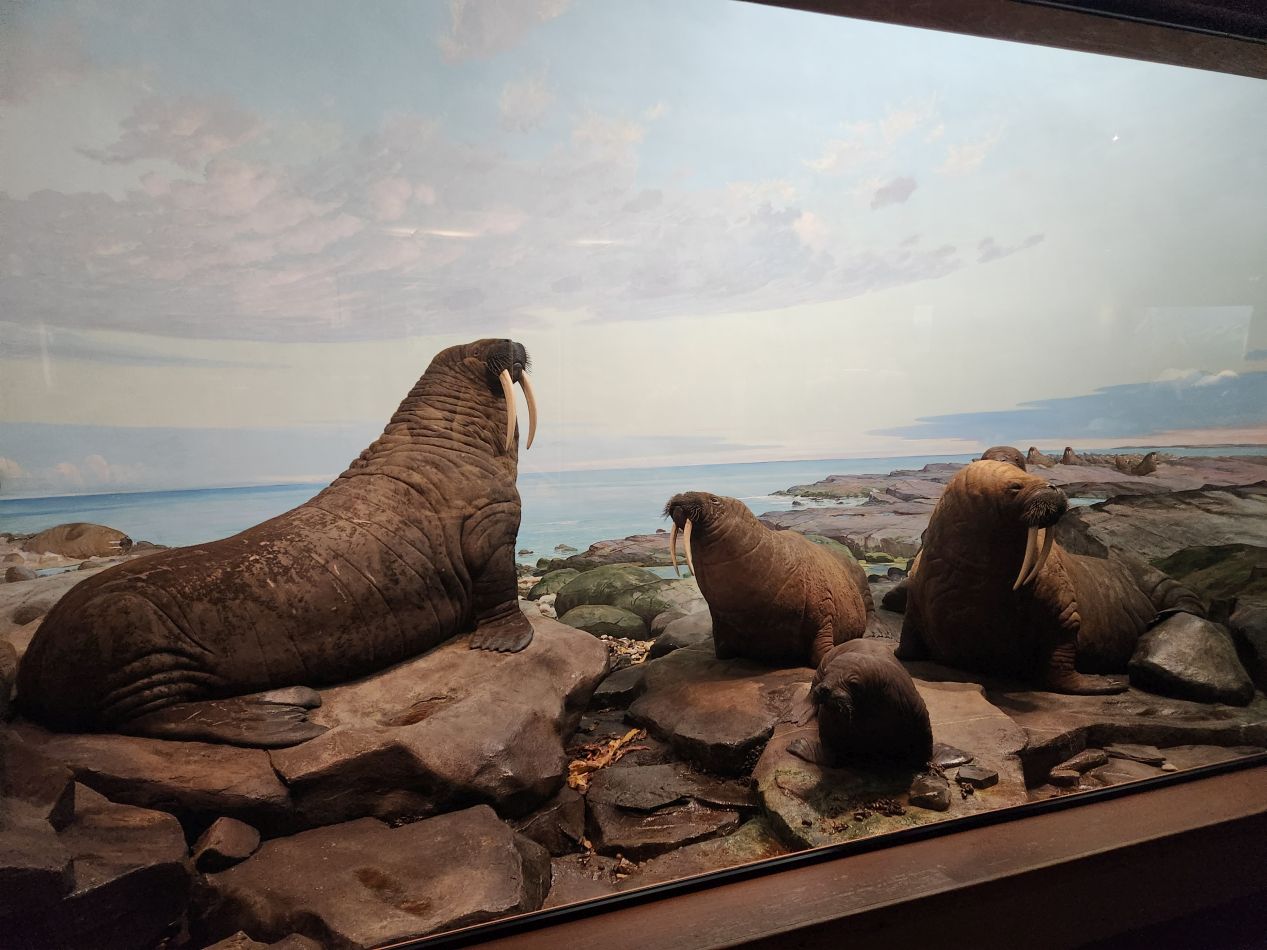


Finally we found ourselves in the modern portion of the Carnegie Museum, dedicated to the current wildlife from different parts of the world. We started in the Africa section and then made our way to the North American portion, both of which contained lots of taxidermy displays of various animals. Liz does not like these taxidermy versions of animals but they've never bothered me; clearly this was an older section of the museum dating back to when this was one of the only ways to showcase exotic animals to the public. We wandered around these areas for a while and let the kids play in the animal discovery section, which had small objects like figurines of different whales and several types of animal teeth, lots of stuff for them to touch and experiment with. By that time it was approaching lunch and we separated from my parents to get some food, followed by spending the afternoon driving back home while the kids napped for a good portion of the drive. We enjoyed the morning that we spent here at the Carnegie Museum and would recommend it for anyone who enjoys dinosaurs, otherwise it's probably skippable.
On the whole, we had a wonderful time on this trip and thoroughly enjoyed the city of Pittsburgh. It helped that we mostly had excellent weather and that we had rented a house in a great location, but nevertheless we felt that there was lots to do here and that the city was very kid-friendly. William and Charlie handled themselves well and looked like they had a lot of fun; they certainly had their occasional meltdowns but handled traveling really well for their ages. We visited Deep Creek Lake in western Maryland the previous year and William had a lot of trouble sleeping outside his normal bed which he completely overcame on this trip. Based on their experience here, we're hoping that we can take them further afield next year when they get a bit older. I hope this was entertaining to read even if it wasn't anything particularly wild - thanks as always!


